This blog contains material I wrote and posted on multiply.com between the years 2005 and 2011 only. It does not contain any new material. For newer writing, please check my main blog (Bill the Butcher).


Showing posts with label military. Show all posts

Wednesday, 28 November 2012

A Prediction that, thankfully, failed

30/8/2007...


There is a hoary old tradition in Indian government circles. Except in those cases where recruitment is on the basis of national level or state level competitive examinations, there is almost every time a little comedy played out. Advertisements are posted in the papers, applicants short-listed, called for interview, and all the time everyone in the swing knows who’s going to be selected ultimately. The entire interview process is, basically, eyewash. And the “victorious” candidate is never the best. Well, of course he isn’t. If he was, there would have been no need to rig the interview in the first place.
Nowadays that tradition is about to step out of government appointments and into the military sphere.
It’s been years since the Indian Air Force (IAF) – for whom I used to work till eleven months ago – expressed the need for a multi-purpose fighter (Multi Role Combat Aircraft, MRCA, as they call it). Whether they actually need such a fighter is a different issue; right now, though, they are basically dependent on variants of the 1960s vintage MiG 21, which is in the process of being upgraded so it can hang on for a few more years. The MiG 21 was supposed to be replaced a long time ago by the Indian indigenous fighter, the Light Combat Aircraft (LCA) Tejas. But the LCA is so far behind schedule that it’s yet to even begin production, and it’s so far from Indian that even its engine has to be imported. The Indian Kaveri engine that was supposed to power it shows no signs of ever being made. Most damning of all, the IAF itself has obviously lost all interest in the LCA; it had been arm-twisted by the government into placing a farcical order for twenty aircraft, none of which is anywhere near being made yet, but in the meantime needed a real replacement. Meanwhile its real strength has dropped to some 29 squadrons, allegedly insufficient for it to perform its duties. That is, if you agree that it needs any new planes at all – which is a point I shall get back to in a moment.
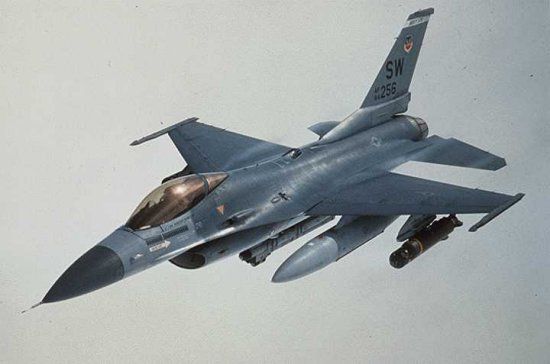
So the Indian government short-listed six aircraft manufacturers for the contract to supply 126 combat aircraft: Dassault Aviation of France for the Rafale, RAC MiG Corporation of Russia for the MiG 35, Eurofighter GmbH for the Eurofighter Typhoon, Saab of Sweden for the JAS39C Gripen, and …very significantly … Lockheed Martin and Boeing for theF 16 Block 60 and F/A 18 Hornet respectively (both US). The cost of this contract is – hold your breath – ten billion dollars.
I wonder how many schools and hospitals that could create, how much damage to the environment could be reversed?     
I might as well say right now that in my opinion at least three of these six – Dassault, Saab, and the Eurofighter consortium – have been included just to make up numbers. No one’s even talking seriously about any of them. So we come down basically to the MiG 35 and the two American aircraft. And things get interesting at this point.
Remember this – the buying of a fighter doesn’t mean just the buying of the aircraft itself. It means the need to set up an entire infrastructure and support system, for repair, servicing, even for refuelling and so on. In order to economise, you know, nations try and make their aircraft (and other equipment) as far as possible compatible with the same set of tools and equipment. Just as you’d probably prefer to buy a car your local garage could service rather than something exotic nobody in your town had ever seen before. Get my point?
OK. So, since virtually our entire air force inventory is of Russian and French origin, all systems are configured for servicing Russian and French aircraft. Now you’d think that common sense would dictate that you stick to those manufacturers whose equipment you’re already using, whose aircraft are equipping your squadrons, whose tools you’ve stockpiled, right?
Right. If you have sense, that is.
Unfortunately, that’s precisely the sort of thing you can’t depend on inIndia.
And that’s why the two American aircraft are included in the list. Hell – you’d even have to get a new set of spanners to service the damned things.
And now let me make my prediction: the Indian government has already decided to select the Lockheed Martin F 16. All the rigmarole over trials and selection procedures are a gigantic farce.
Would you like to know how I arrived at that conclusion?
First. Our air force doesn’t really need any more planes of this type. We already have two highly capable multi-role combat aircraft, Sukhoi’s Su 30 MKI and Dassault’s Mirage 2000. We don’t need any more planes of this type to replace retiring aircraft simply because there is never going to be a big war again where they can be used. Wars – even bush-league wars - are incredibly draining on resources, as the US is discovering in Afghanistan and Iraq. The capitalist class that rules India these days isn’t involved in defence production enough to make any serious money out of it. So that class has no interest in going to war. Even a direct attack on India, if it ever came, isn’t going to provoke an all out war. All there might be is a lot of posturing and sabre-rattling, but, depend on it, no fighting (for example, Operation Parakram of 2001-02).
If there is a war at all, it’ll be a minor affair of strictly limited geographical area, where the Sukhois and Mirages might not even have to be used. If they are used, they would be more than good enough to do the job required.
So, since there is no risk of ever going to war again, there is no risk in buying equipment that can’t be digested and absorbed easily, that will require a separate system for maintenance, that might turn out to be unusable junk in the long term. You get what I’m talking about. Thecapabilities of the aircraft selected don’t matter at all, since it is never, ever, going to be used anyway.
Second. If at all we need aircraft, what we need are dedicated counterinsurgency (COIN) planes – slow flying, heavily armed and armoured aircraft of an entirely different type from the MRCA our air force is determined to procure (examples are the A10 Warthog or the Sukhoi Su 25). However, COIN planes are relatively cheap and where there is less money being thrown around there’s less chance that some of it might find its way into someone’s pocket. So, although back in 1999 (during the Kargil "war" against Pakistani troops) everyone was groaning about the dearth of COIN planes in the IAF’s inventory, nobody has mentioned them again afterwards.
Third. This government is, as I said, ruled by the capitalist class. No Indian government these days is its own master, hasn’t been for a decade and a half. Earlier it used to be the Ambani family that used to run India – and these days it’s Ratan Tata. Tata is openly pro-American and a strong supporter of the Nuclear Deal. And the Americans know very well how much influence he wields. So, when there was an air show in India earlier this year, Aero India 2007, they made sure that hegot joyrides in both planes – and came down babbling about how he enjoyed the rides.
Fourth. The higher reaches of the military are absolutely rotten through with corruption and are completely susceptible to government pressure (in any case it’s only politically “reliable” officers who get to the top positions). So whatever is right for the Air Force isn’t necessarily what it will say is right for it. There’s no point saying that “this is what the IAF says is right.” I recall watching (in 2004) an American air force delegation given a free hand to tour parts of the Indian Air Force regional command headquarters here. They were allowed to photograph whatever they wanted and go wherever they wanted – even to areas out of bounds to Indian airmen without special clearance.
Fifth. If our current government has a foreign policy at all, it can be summed up in one sentence: suck up to the Americans at all costs. This is more than obvious at every stage. The government no longer even makes any serious attempt to deny it. To make the Americans happy, of course, any and all means are OK. Not so Russia or France– they are only our friends, not the Masters of the Universe (and Franceunder Sarkozy is showing signs of backsliding, too).
Sixth. The Indian middle class couldn’t care less about what happens to its tax money (insofar as it pays any) so long as it can buy its LCD televisions and snazzed up cars. The Indian Middle Class is a topic in itself. I could go on and on…
So, the imperatives of the situation are: no big war; a lot of money going around; capitalist backing; government support; and personal pro-Americanism.
There is no reason the American planes would even be on the short-list unless they were to be chosen, for the reasons I outlined above. So, the IAF is going to select either the F 16 or the F 18.
Now, I believe we can narrow it down further. It’s going to be the F 16.
Why?
Firstly, unlike the F 18, production of the F 16 is winding down (it is no longer in production for the USAF) and jobs might be lost without the Indian order. Just as India, to please Britain, bought Westlandhelicopters in the late seventies so that that company got a new lease of life. The Westlands were such junk they never even got into proper service and were all scrapped. But who cared so long as India made Maggie Thatcher happy. Making Bush happy is all this government cares about.
Then, Boeing can be “compensated” by major orders for commercial aircraft, so even if it doesn’t get the F 18 order, everyone stays happy.
Naturally, there is one more “advantage” to buying American aircraft. If the Americans – as they have many times before – impose sanctions to twist India’s arm, there will be an excellent argument in favour of giving in to American demands – “or else our equipment would be useless.”
India’s defence minister, AK Anthony (a very short man who had a police officer dismissed for referring to him as “shorty” during a conversation on police radio) said the deal will be completely transparent. Right. Everyone knows how transparent it will be, with the papers and the television channels paid to support one point of view and misinformation carefully fostered. Already the right wing media refers to the MiG 21 as “flying coffins” and deliberately confuses it withall MiGs. I can assure you that you’ll find a lot of anti-MiG articles in the newspapers in coming days.
You understand that sucking up to America is all these people care about. Even if American bombs were to be raining down on Delhi, they would still be trying to suck up to Washington.
This is why any and all invaders were able to rule this country as and when they wished.

Monday, 26 November 2012

India's Own "Star Wars"

(From Dec 2006)


I guess it was just waiting to happen. After all, we are told, we're an emerging superpower (albeit one at the extreme bottom of the Human Development Index) and therefore we should feel, inevitably, properly paranoiac. And what better way of proving paranoia than acquiring our very own anti-ballistic missile programme?
So, the Defence Research and Development Organisation (DRDO), whose lack of success in the past has been conspicuous, has, on 24 November, "successfully" intercepted a Prithvi missile 50 km over the Bay of Bengal with what is claimed to have been another Prithvi missile. Great. Our cities are all now safe for all time to come.
Time for the celebrations to begin. (Cue in the triumphal music.)
Or is it?
While it is true that with this test, India joins the US, Russia, and the so-called state of "Israel" as the only nations with or trying to develop this technology, perhaps it's time to wonder why other nations are nottrying to develop it?
After all, we are bombarded every day with clamorous claims of how terrorists or "rogue nations" will wipe us all out one of these days with nuclear missiles. So, why do most nations not bother with missile defence systems? Maybe they have a death wish?
Not really.
Anti ballistic missile systems can be faulted on three counts: they areunworkablesymbolic, and suicidal.
First: why are they unworkable?
Anti-ballistic missiles work on the principle of hitting the enemy's missile with your own before it can get close enough to do damage. I'm talking about the enemy's ballistic missiles here, which fall under the force of gravity at several times the speed of sound, not about slower cruise missiles which can be shot down with anti-aircraft fire.
Ballistic missiles work this way: once launched, they rise verticallyinto the atmosphere (as opposed to cruise missiles, which fly like aeroplanes more or less level, and which are really small pilotless planes). Once in the upper reaches of the atmosphere, virtually in space, they fly in a parabola until gravity brings them back down on the predetermined target.
Ballistic missiles can therefore be, theoretically, shot down at three phases of their flight - during the boost phase when they rise above the atmosphere, while they are coasting in the upper reaches of the atmosphere (virtually in space), or in the terminal phase, when what is left of the missile (basically the warhead) is falling to earth under the influence of gravity.
Now, intercepting the missile in the boost phase will be the best option, of course, because it destroys the missile in the earliest and most vulnerable stage; but how the hell are you going to do that? You would need to be close enough to have your own missile fly over into the enemy's territory and knock out a missile going rapidly upwards at several times the speed of sound, and all at a few seconds' notice. No, that isn't going to happen.
Then?
While it's coasting? In the first place, the missile, for heaven's sake, will be moving through what we might for want of a better word designate "heaven" - the edge of space. Your own missile will need to be mighty nimble in order to get up there. This phase was in fact the stuff of the fevered dreams of the Reaganite "Star Wars" (more properly Strategic Defense [sic] Initiative) period. I'll devote another post sometime to that fantasy. No space for that dream here; and it was cuckoo-land, pure and simple. Take it from me.
One simple way for any ballistic missile to defeat anti-missiles at this altitude would be to release any number of lightweight decoy warheads. This is extremely easy, because up at this altitude the atmosphere is so thin as to be nonexistent and the heavy warhead and the light decoys will travel at exactly the same speed. They will also be identical in appearance to radar, and radar (space or ground based) is what will remain the only way to detect incoming missiles at this level. So your precious antiballistic missile - if it ever gets up to that height, and fast enough - will lose itself in hunting for the one genuine target in a multitude of fake ones, even if it has just onemissile to counter. And, of course, Multiple Independently targetable Re-entry Vehicle (MIRV) technology allows each missile to carry several warheads. A gambler would not like to bet on your chances. Long odds, as they say.
So, your chances come down to just one, and the terminal, phase - the re-entry. But now the decoys will have fallen behind due to their light weight and increasing atmospheric drag, and they will burn up soon enough. What you have is a very small target(s) falling to earth at many times supersonic speed, and you will have to giude your missile to strike it. It's just like hitting a bullet with a bullet. Which, despite Hollywood and the Tamil film industry, is not an easy thing to do.
Now, modern missiles can and probably will be designed tomanoevre in this phase (it's called terminal guidance), and this will make them doubly, trebly, or even more difficult to hit. Even an old missile (like the Scud) can break up and begin to tumble, which makes its trajectory unpredictable and it difficult to intercept.
OK, just what happens if you do hit it?
In Gulf War I, 1991, the much hyped US Patriot missiles were supposed to knock the Iraqi Scuds out of the air like clay pigeons. In reality, Patriots had a success rate, depending on who you believe, of between five and ten per cent. Anti-aircraft fire would have done about as well. Besides the fact that Iraqi Scuds were without terminal guidance anyway, let's remember that this same Patriot, in its user trials, had achieved a 100% success rate - 17out of 17 interceptions! Success in trials has little or no resemblance to success in combat. And of the Scuds that were intercepted - virtually all of them were merely disintegrated by the Patriot, the warhead continuing on down to hit close to, if not on, the original target.
If you're defending a small target, even diverting a warhead can save you. But if it's a city, or if the enemy warhead is nuclear or biological, you'd better finish it or you'll be finished by it even if it lands kilometres away...
So hitting the target might not get you anywhere. In fact, it is unworkable.
Also, think of it. how many targets can you defend? You can't posibly defend every point of a country, even a small one, let alone a nation as large as India. At the most, you might be able to cover the capital (again, without any guarantee of success) and the major cities, at prohibitive cost. So, the defence shield will be only symbolic.
And not only that, it will be suicidal. Imagine what you face in a situation as between India and Pakistan. Any Pakistani missile will take only minutes to reach Indian territory. How long do you have to be sure the missile is incoming/ How fast will you deploy them? Can you launch one fast enough to be sure of taking out even one misile, especially in case of a surprise attack? What happens if you fail?
Now look at it from the other side's view. No one imagines missile defence will ever be 100% effective. The votaries of an ABM shield just disagree about the percentage of missiles that will actually be destroyed, 10% or 99% or whatever. The launching side will have to assume - it will have no alternative but to assume - that the maximum number of its ballistic missiles will be knocked out. In order to ensure its own security, therefore, it will have to build enough missiles to swamp your defences. In any case, they will have certainly, and prudently, overestimated your defence capability. So, by deploying anti-missile defences, you will just guarantee greater destruction to yourself!
And then there is also the fact that when you see what may or may not be missiles launched at you, you will want to get your own ballistic missiles off as fast as possible before the enemy can destroy their launch sites before they can take off. You can't wait long enough to take chances, especially in conditions where the warring nations are just minutes from each other. So, in order to escape the enemy first strike (which will try and disarm you by knocking your own missiles out) you will launch your own ballistic missiles. And if it just so happens that your "incoming missiles" turn out to have been a computer glitch or a meteor shower, your missiles are now gone anyway and will be impacting on the other country in a minute. This is not the sort of situation where apologies will do. Whatever opposition missiles survive (and there will be many more of them than would have been had you not had an ABM shield) will then take off to hit you for a second strike. Your goose is again cooked. (When the adversaries are as close as India and Pakistan, of course, when you launch a missile you are basically guaranteeing nuclear fallout in your own territory, but let's ignore that for now.)
And then there is something else. Most ballistic missile shields would really be worth the expense in only one situation - where the incoming warheads are nuclear. Well, then, there is a great way of circumventing that - the enemy might just make nuclear "suitcase bombs" and smuggle them in. Much easier than complicated missiles and warheads, and besides, a nuclear strike becomes deniable. A suitcase bomb is highly deniable ("terrorists did it"), and you don't even need a suicide bomber - it can be rigged to explode at a phone call. And it needn't be in a suitcase either. Think about it - you don't have to keep its weight down or invest in shielding to keep it safe during flight. you can make it as big and powerful as you please, big enough to fill a truck which can be kept driving round streets as long as necessary...
Therefore, anti-ballistic missiles are suicidal.
Then there is just one small thing further - the little fact that while we've just had a "successful test" of an ABM system,
The upgraded Prithvi ABM interceptor appears to rank with the U.S. Patriot PAC-3 system, Russia's S-300 and Israel's Arrow in its intended ability to intercept short- and intermediate-range ballistic missiles. However, the Patriot, the S-300 and the Arrow are all deployed, much tested systems. Even after the extremely positive results of Monday's test, the upgraded Prithvi ABM still clearly as a long way to go to achieve that status. (source:http://upi.com/SecurityTerrorism/view.php?StoryID=20061130-055028-9393r)
And, of course,
the DRDO had previously "failed to operationalize (sic) the much touted 9-kilometer (sic) (5.4 mile) range Trishul and the 25-km (15 mile) range Akash air-defense (sic) missiles. These missiles have been undergoing 'successful' tests for as long as anyone can remember." (ibid)
It might just be that the groundwork is being laid to buy the American Patriot II missile, just as a stop-gap till our own missiles are ready. The Americans want very much to sell us this missile, and our government is pathetically eager to please them at any cost. Of course, our own missiles will never be ready, which means the stop-gap will become (as planned) permanent. I remember a piece of propaganda in The Times Of India which claimed that while the Patriot I had failed to stop Scuds during Gulf War I, not a single Iraqi Scud had got through the Patriot II screen in Gulf War II. Well of course bloody not. The Iraqis did not have a single Scud to launch in Gulf War II. Had they had any, the Americans could have claimed to have found WMDs!
But, despite all of these factors, India will carry on along these lines. When it comes to defence contracts...
...a lot of money floats around, you know.

Treading on Eggshells: the curse of the landmine


Let's just imagine.
Imagine you're a little boy, oh, say, ten years old. You're a farmer's son, and in your time off from school you do odd chores and work in the field. You're pretty lucky that way - your parents never had the luxury of school, themselves, but they're putting you through it. Of course you still have to help out, but you don't work morning to night, all day, every day.
Got it? Got the picture in your mind's eye?
Good.
Now...
So, one morning - it's a holiday - you go out with the family cow and her calf to the field, to let them graze. It's early winter, chilly, the mist heavy on the ground, and no cultivation right now. The ground is fallow. Over to the west the border where, a couple of years ago, the soldiers had dug their trenches is now bare as it ever was, and is still shrouded in darkness. You were too little to remember well that time when your parents were prevented from going to the field to work, because it had been taken by the military for their own purposes. They had kept it a year, "in the national interest". Then they had done things to it, dug around, and then they had gone away.
You hardly remember that time.
The mist lies low on the ground - you can't even clearly see the ground you are walking on. You pull your shawl around you, and shiver. Let the cow and calf eat, then you'll take them back to their shed, tie them to the post, and go for your breakfast. That's what you think of.
And the next moment:
Suddenly you are hit by a terrific blow. It's a blow you could never, ever, have expected, because it comes up at you from below, from the solid ground. One moment you are walking along, shivering, still half asleep, wanting your milky tea; the very next, you are suddenly flat on your back, watching the sky go grey and the world get dizzy as your consciousness fades from blood loss...
You come to, much, much later, in an ill-equipped local hospital. You wake topain. Pain such as you have never known, pain that is all you can think about, pain that the medicines do little to alleviate.
Some day, the pain will go away. The physical pain. Then the other sort of pain will begin...
The pain of how to go through life with one leg amputated at the knee. As part of a poor rural farmer's family, which has no resources to adequately treat your injuries, or buy you a proper false leg. And of course, with no  guarantee that it will not happen again, to the other leg as well.
Imagined it? It happens -  somewhere in the world - every day.
Welcome to the world of the  anti-personnel landmine.
What do you do when a war is over, or when it has been averted at the last moment? You withdraw your forces from the battlefield, do you not? And you sort of remove left over weaponry, so far as possible, so people don't keep getting blown away half a century from, now, do you not?
Well, where landmines are concerned, not.
Unlike the naval mine, which by international law is supposed to deactivate itself after a specific period, no such law exists for anti-personnel land mines. And being cheap, destructive force multipliers, they are extremely popular as weapons in "uneven wars" where one side is either much weaker than the other or wants to adopt a defensive attitude, or even just as a terror weapon. They are more often than not intended to injure, not kill outright, because an injured man is more of a burden on the enemy than a dead man. At the same time, cased in plastic, they are extremely difficult to detect. And once the war is over, they will continue, on and on, to injure noncombatants, and often, to kill. And, of course, the most prominent victims of mines are those who have no alternative but to put themselves at risk - the poor who must claw a living from the land. Who cannot afford treatment either.
India launched a year long military demonstration called "Operation Parakram" in 2001-02 on the Pakistan border. Although this demonstration was a spectacularblunder and had never seriously been intended as preparation for war, it did involve the laying of many thousands of anti-personnel landmines along the Pakistani border in order to try and stop Pakistani armed thrusts into Indian territory. By June 2002, casualty levels from landmine blasts had already approached those suffered (by unreliable official figures) during the Kargil "war" of 1999. I recall one of these blasts occurring when mines were being unloaded from a truck and blew up, killing many soldiers. Those mines had fuzes constructed by toy maker Tobu. I don't know if there is a cause and effect relationship there.
After the army was withdrawn from the borders, demining was begun. Now this is not a simple job. When an army (unlike an insurgent force for example) lays mines, it is supposed to make clear records where each mine is so that the mines can be removed later. But demining, compared to laying mines, is expensive. An antipersonnel landmine is very inexpensive to buy.  It costs approximately one dollar to produce one mine. However, clearing an area of antipersonnel landmines is extremely expensive. Costs vary between $1,000 to $3,000 per mine, not to mention the enormous human, social and ecological consequences of removing the antipersonnel landmines. Also, many mines were no longer where they had been laid. Snow (in Kashmir), rainfall, and even animal burrowing had shifted them from the place they had been laid. Therefore, many were never recovered. Also, as the government has now admitted, demining equipment was not purchased for the army because, for some incomprehensible reason, the army did not think earlier that it would need it.
So, till today, the odd mine continues to blow the legs off an occasional border villager going about his or her business. These mines are often, in fact, shaped like toys or other harmless objects. Thus making them even more dangerous.
Things are of course far worse in such mine hotspots as Afghanistan, where the original enthusiasm post 2001 for demining has given way toindifference. Don't get me wrong - I'm not an anti-landmine fundamentalist, I recognise that they have legitimate military applications - but I think I have the right to join others in insisting that the people who lay these mines must ensure that civilians do not suffer the consequences of their actions, and, those, for years to come.
Given the use of cluster bombs and depleted uranium against civilians, not to mention napalm and Agent Orange, though, fat chance. So, despite the efforts of Heather Mills McCartney (gold-digger or not) and other anti-landmine campaigners, the kids will keep on losing legs.
Like you did, a while ago.

How to Scuttle Yourself: The Graf Zeppelin and the Nazis

It amuses me sometimes when I hear of how this country or that “saved the world from the Nazis”.
At the most they saved their own asses. Not the world.
This is because, folks, the Nazis could never have won the war. Even if they’d won every single bloody battle, they’d still have lost in the end, collapsed under their own weight of contradictions.
Here’s an illustration of why:
If you’ve seen films like Tora! Tora! Tora!MidwayThe Sinking of the Bismarck, or even (gag) Pearl Harbor (sic), you’ll have noticed the aircraft carriers liberally used by the British, Japanese and Americans – but the Germans, despite their large and powerful navy (theKriegsmarine), never had an aircraft carrier.
Well, that’s not quite true. The Germans had an aircraft carrier programme in place as early as 1935, with four carriers planned. The first, called Flugzeugträger A (Aircraft Carrier A) before its launch in 1938 and named KMS Graf Zeppelin afterwards, was scheduled to be ready by 1940 – and yet, it was never, ever completed, even though a few carriers would have given the Germans a terrific advantage at sea.
One of the main reasons why the carrier wasn’t completed was the little fact that Reichsmarschall Hermann Göring, chief of the German Air Force, the Luftwaffe, didn’t want anyone but his own men to operate aeroplanes. So he systematically and successfully sabotaged the plans of the German naval chief, Grossadmiral Erich Raeder, to make the carrier operational. One way of doing this was to offer only obsolete planes, the Messerschmitt Bf109E and Junkers 87 Stuka, for use on the carrier – and those in navalised versions, which, he insisted, would not be ready before the end of 1944, by which time, naturally, they would be even more museum pieces than they already were. Another way was to insist that the pilots of the planes would remain underLuftwaffe command, which means that for every operation launched from the ship, the pilots would have to receive orders from Luftwaffeheadquarters in Berlin and not from the naval officers commanding the ship!
No wonder Hitler, a man of limited imagination who was never enthusiastic about the sea in general and carriers in particular, gave up on the carrier…
So what happened to the Graf Zeppelin?
Although about 80% complete, the ship spent its time in harbour being used as a floating depot ship, while its planned sister ship,Flugzeugträger B, was scrapped in 1940 and the C and D were cancelled. In April 1945 its crew sunk it in shallow water to prevent it from being captured by advancing Soviet forces. They, however, raised it easily, towed it back to Russia, and in 1947 sank it as a target ship. The wreckage, seen here:

was finally found in 2006 by a Polish diving team.
Actually, the carrier was poorly designed, and wouldn’t have been much of a match for more sophisticated carrier forces, but that isn’t the point. The point is the fact that the Nazis were so busy in their internecine turf battles (of which I’ve mentioned just one) that they probably would have fallen apart immediately once Hitler left the scene.
All of which makes neo-Nazis today even more comical than they would otherwise be…

Conscription, Дедовщина, and things


We’ve always had the slavering chicken hawks who would love our army to "crush Pakistan/ the opposition/ whoever else the target of their latest ire is (for a while in 2004 that target was the Holders Of The Black Banner, the Iraqi resistance group which took some Indian truck driver mercenaries hostage). These are also the people who hailed APJ Abdul Kalam’s suggestion of compulsory military service for young people as a means of installing discipline and national integration. Lovely sentiments – only, those very same people are the ones who would never, ever, in their wildest dreams, even consider volunteering for service themselves or allowing any of their relatives to be called up.
It’s their job to make jingoistic statements – the actual fighting and dying is always someone else’s job. (The situation is the same in the US - almost none of the most hawkish Bushies have any family members in the services.)
And if ever, by any mischance, the government took the step of making military service in any form mandatory, you can be sure these selfsame people would do anything – pay bribes, falsify records, do whatever it took – to get exemption for themselves or their wards. Everywhere those drafted are those who are too poor to pay or wangle their way out of uniform. And we all know how "honest " India, and the Indian Army, is. Conscription would be greeted with shouts of joy by those who would make money out of getting people out of it.
I remember the time I was in dental college, in 1990, when the Kashmir mess had just begun. The assorted morons in the college all signed pledges in blood and sent them to the then Prime Minister, VP Singh, promising to lay down their lives in the cause of keeping Kashmir Indian. Did any of them actually join the army and fight? Are you crazy?
Apart from this basic problem, just how would India go about clothing, feeding, arming and training that gigantic and unwieldy an intake of soldiery every year? Is it even feasible?
A good idea of the merits and otherwise of conscription would be gained from talking a look at conscription in action – so let’s look at the Russian Army.
In St Petersburg I saw many conscripts like the three in the photo on this page. I was also told (by Tanya) that young Russians now consider military service the equivalent of prison, which I found a remarkably sad statement, given that it was Russian conscripts who saved France in 1914 by drawing German troops from the Western Front in World War One and saved the world from Nazism in World War II. But as I read and researched more, I came to accept the truth behind her statement.
Russians are supposed to be called up on their eighteenth birthday (unless they are on student deferments) and all medically and physically fit Russian males between the ages of 18 and 27 are supposed to do two years of military service (if picked for the army) or three years (if picked for the navy). The system has been in force for many decades. During Soviet times everyone eligible, practically speaking, served – the percentage of draft eligible males serving was about 80.
Today, according to the Russian Army’s own figures, that percentage is about 9%. The rest buy or bribe their way out. Why?
The reasons can be broken down to basically two.
The first is lack of funds. This has led to awful housing, food shortages, skimped training (the average Russian officer receives only a fraction of the training he received during Soviet times, and like the Indian Army the Russians rely excessively heavily on the officer corps for leadership in battle rather than on a professional NCO backbone like the Western armies) and is directly responsible for the second reason, which is:
Дедовщина (Dedovshchina, meaning "rule by grandfathers"). This was an old tradition in the Russian armies since Tsarist times. The "grandfathers" are soldiers in their second year of military service, who would lord it over the fresh intake in a mix of moderate bullying and "initiation rites" similar to ragging in Indian universities.
According to all sources I have been able to access, the brutality of this practice has increased tremendously since Soviet days (when it was really not much more than a rite of passage) to the extent where it has become perhaps the single greatest problem facing the armed forces, with up to perhaps 1000 deaths of conscripts per year due to torture at the hands of their seniors, due to beatings, starvation, freezing, and - in one celebrated case this January - the amputation of a soldier's legs and genitals after torture caused gangrene. Fresh soldiers are often used as slaves by their seniors, handing over their pay, doing their chores, going out to  beg for food and money (this may have stopped now that the Russian economy is resurgent), ending up at the end of sadistic violence even then and getting no more than an hour of sleep a night. (I must emphasise that I do not have current reports - things may have changed for the better.) The fund crisis after the collapse of the USSR and the utter incompetence of the venal Yeltsin regime (so beloved of the US) made soldiers beg in order to survive; even when things improved, the past necessity dovetailed with the old tradition of bullying to make a lethal cocktail. When the first year draft reaches the second year, it itself takes part in this, simply out of revenge. That impulse will be familiar to anyone who has passed through hazing in an Indian technical university.
In the meantime, the officers are either absent or unwilling or unable to interfere. As one junior officer said, the soldiers who made up the current intake were school dropouts, drug addicts, and the like, ending plaintively, "I have no levers. How can I control these soldiers? They should be put in prison, not called up to serve in the army. They are basically criminals."
Dedovschina of course causes massive morale problems, and is the most serious cause of dodging conscription in Russia, where many ideologically motivated individuals would otherwise still want to serve. It also sharply reduces the effectiveness of the army, evident in the catastrophic defeat of the Russian Army in the First Chechen War. When the Russians returned to battle with volunteer troops in the Second Chechen War, they won a relatively easy victory.
The Russians are aware of the problem, but plans aimed at producing an all volunteer army are in abeyance (perhaps due to the wishes of senior officers to use conscripts as easily available unpaid labour). I have read that plans exist to reduce the term of conscription to one year from 2008, which by eliminating the "grandfathers" would automatically eliminate dedovshchina.  I however don't know if these plans would be implemented. Even then, this would not eliminate the other problems - shortage of money, housing, training, and a lack of a professional non-commissioned officer corps. Many of these problems are endemic in the Indian Army as well, and the Indian Army is a volunteer force.
There is no reason to assume that the fate of a conscript Indian Army would be any different.

White Water Elephant: The Indian Aircraft Carrier

From March 2009

The dawn rises slowly upon the flat blue sea.

Out of the western darkness comes a floating city, complete with airport, a mass of metal from which sleek fighter-bombers take off, crewed by the best of the best of the world’s pilots, loaded with fuel and  weapons, to deliver their loads of death and destruction on enemy targets hundreds of kilometres distant, reigning over a swathe of ocean, undisputed lords of the air and the sea and what lies beneath. A grand vision, isn’t it? Seductive?

Sexy indeed, if you’re of the proper mindset.

Aircraft carriers aren’t very common beasts on the world’s seas – there are currently only 22 of them afloat, and of them exactly half belong to only one nation – the United States. They used to be somewhat commoner in former times, but for some really not very obscure reasons most nations seem to have decided that they can get along well enough without them...but not India. No. 

I’ve said, so many times that regular readers of mine will be sick of it by now, that Indian planners – civilian as well as military – lack both imagination and forward thinking ability. This is allied with a very strong streak of tokenism. In fact, one might say that tokenism is the most important facet of all forms of Indian planning – including defence.

So, while we slip further and further down the list of nations in the Human Development Index, and while schools in the villages exist only on paper and hospitals lack doctors and nurses, we continue to spend more and more on defence, of all things...in addition to tax sops for corporate entities, of course.

But about the defence, since it’s probably one of the largest single items of expenditure as far as our government is concerned. On the face of it, it might even seem kind of justified – as a nation facing many insurgencies and a distinct terrorist threat, both an acknowledged threat from jihadis and an unacknowledged threat from Hindunazis, any nation with a modicum of prudence would invest in security forces. But the rub, as one might put it, lies in just what form that investment lies.

You’d assume that, as a nation facing a semi-permanent low-grade combat situation, the thrust of the military spending (whether justified or not) would be on the common soldiery and special forces, the people who are actually responsible (at least ostensibly) to fight such low-intensity wars. However, after all the fancy spending, the soldiers still lack Kevlar helmets and body armour and use rifles (the INSAS system) whose reliability is suspect and whose design is an untidy compromise between several competing systems; the armed police still depend on World War One-vintage Lee Enfield .303 rifles, many of which are no longer capable of firing; and if the so-called Special Forces have proved none too effective even in Bombay in November of last year.

In the meantime, though, the defence establishment continues to spend, big time, on items which have nothing to do with low-intensity combat, and which, arguably, cannot ever be used – especially since, with our primary adversary armed with a goodly nuclear arsenal, a full-scale war would be equivalent to suicide. So we have large amounts spent on multi-barrelled rocket launcher systems for the army, which lacks even modern helmets or good uniforms; and on 126 fighters for the air force, which lacks a usable trainer (even the Hawk trainers lately imported from Britain are largely immobilised through lack of spares); and for the navy, we’ve just announced the building of our own aircraft carrier.

Ah, yes, that aircraft carrier. I’m concentrating on it because it’s such a perfect metaphor of everything that’s wrong with our defence forces. 

Those of you who have watched that wonderful film on the Pearl Harbour attack, Tora! Tora! Tora!, will remember how the Japanese carrier strike group penetrated within less than 400 kilometres of the American base on Hawaii and launched two waves of attacks, gaining virtually complete tactical surprise and a tremendous strategic victory. And those who know a modicum of military history will know well enough that the carrier forces of the time, American, British, and Japanese, decided between them the outcome of the war in the Pacific.


I assume a lot of our naval officers have watched that film. Also, I make another assumption about them, which is that they’re unaware that this is 2009, not 1941; or at least this is what they seem to be claiming.

Let’s just go over the role of an aircraft carrier once, shall we? It is, when all is said and done, a floating airport at sea, whose purpose is to land and take off aeroplanes which are to be directed to perform certain tasks in warfare. Said tasks can be defensive, involving providing air cover for other ships or for troops on land; or offensive, involving attacking enemy ships or shore installations or troops. Fundamentally, therefore, an aircraft carrier is a ship to be used in situations where other aircraft, based on land, can’t perform those roles – because in that case what would be the point of the carrier at all? Logically, then, a carrier is a ship to be used in combat situations so far from one’s own landmass or friendly bases that land based aeroplanes cannot fulfil that function.

I’m sure that’s clear.

So, tell me this, just what situation could possibly arise where Indian naval ships – engaged in legitimate action in defence of national territories – could be so far from home that they cannot be covered by land-based aircraft? Since I’m not anticipating that India is going to, say, invade Australia or Mozambique, and since I do not think (despite the government we have, whose foreign policy can only be described as knee-jerk pro-Americanism) that we are about to join in an American invasion of Venezuela or El Salvador, there’s no legitimate action I can think of that requires the use of an aircraft carrier. 

That is, then, the first of my objections to the aircraft carrier.

Then, an aircraft carrier, by its very nature, is a large floating object whose primary purpose is to launch, recover, and service aeroplanes. It is not, and never was, a weapons-carrying platform in its own right. It cannot be; the space taken up by aeroplanes and support systems precludes the carrying of more than a limited number of surface-to-air anti-aircraft missiles and perhaps a few anti-aircraft guns, if that. An aircraft carrier’s primary responsibility is to its aeroplanes. This puts it at a huge disadvantage where it is forced to fight against an opponent who has the means and weapons to strike at floating airfields which can do not very much to protect themselves.

Therefore, and the significance of this can be readily appreciated, an aircraft carrier cannot be used alone against any such opponent, because it is likely to be destroyed. It will need a large support group of destroyers, hunter-killer submarines, frigates, and the like, to protect it from enemy surface ships, submarines, and perhaps suicide boats as well. And, since that support group of destroyers et al will require, in their turn, protection from enemy aircraft and surface ships, a large part of the aircraft carrier’s aeroplanes will be permanently tied up in protecting the support group, not excepting the carrier itself. The only way out might be to add more carriers – which would make for more targets for enemy submarines or aeroplanes that might slip through the defensive screen, and so on. It’s a vicious cycle.

This is probably why – ever since the end of the Second World War – aircraft carriers have been (with one exception) never used against an opponent actually capable of shooting back on roughly equal terms. The US used them against North Korea, which had no navy; against Vietnam and Libya, whose navy of missile boats lacked the ability or range to even approach the American carriers (and in the latter case still required the assistance of F111 bombers based in Britain to provide additional support); against Iraq, a nation so devastated by sanctions and undeclared war that it was hardly capable of defending itself, and which, in any case, had almost no coastline, let alone a navy; and against Afghanistan, which is landlocked and incapable of striking back. Britain and France used carriers against Egypt in 1956, against a nation, again, without any means of striking back at the carriers themselves. India (and this shows at least some of the planners are roughly aware of the problem) used its then carrier, INS Vikrant, against Pakistan in 1971 – but only against defenceless East Pakistan (I’ll get to that in a moment) and not against West Pakistan with its screen of Daphne class submarines.

The only exception was the British action in the Islas Malvinas (so-called “Falkland Islands”) in 1982; in the course of that colonial war, two British aircraft carriers, HMS Hermes (of which more anon) and HMSInvincible, were used against the Argentines. But the entire action was fraught with nervous risk because of the fact that the Argentines possessed a tiny handful of French-made Exocet missiles, which sank several British escort vessels from the support force; and the Argentines did not risk the use of their own aircraft carrier (they had one at the time, which was later retired and not replaced) at all, though it did put to sea. If the Argentine junta had possessed some more Exocets the story of the war might have been a little different.

Also, in a modern battlefield environment with satellite coverage and real-time intelligence, a ship as large as a carrier can’t hide; there won’t be any more Pearl Harbour style attacks because the strike groups can’t approach the targets undetected. Yes, the carrier might improve its chances of escaping detection a smidgen if it dispensed with its escorts and went out alone, but of course it would then put itself at the mercy of any enemy sub that happened on the scene. And enemy subs can even penetrate the defensive screens of the escort group with little trouble, as a Chinese Song class sub did to an American battle group, so one can readily fill in the blanks of what happens to a lone carrier in wartime. Glub, glub...

In summation, therefore, an aircraft carrier is usable today against an opponent who has no effective means of retaliation; against an opponent who can fight on equal terms, the use of a carrier is extremely risky, and even with all precautions a carrier can be sunk for a tiny fraction of its own cost in money and effort. As the late Admiral Rickenbacker of the United States Navy said, “An aircraft carrier should be expected to last two days in a modern conflict, after which it is expendable.” Especially in the case of a nation as risk-averse as India, whose navy sat out the 1965 war against Pakistan in harbour for fear of losses, a potential carrier sinking would be a catastrophe of such dimensions that no naval chief would ever put a carrier in such harm’s way.

That is the second of my objections to the aircraft carrier: that even if there should be an occasion where it might be legitimately used, no naval chief would dare put it in combat against a capable foe anyway.

Then, there is the little fact that an aircraft carrier is an awesomely expensive ship; even such a relatively modest vessel, by carrier standards, as India’s proposed new flat-top is projected to cost US$ 762 million. (In reality, given the history of Indian defence projects, it would be surprising if it did not cost many times more by the time it’s finished, assuming it ever is.) This is quite separate from the cost of the aeroplanes it will operate (including the MiG29K, the obsolete Sea Harrier – all of which in India’s possession are now grounded because about half have been lost in accidents over the years – and the naval version of the indigenous Light Combat Aircraft Tejas, which is an aeroplane that as of now does not even exist). 

Add to that the cost of the special dry-docking and other repair facilities to service such a large and complex ship, which will be of no use for other ships. And then add to that the cost of the ships of the escort – the destroyers and frigates and submarines. And then you have to add to that the cost of the ships that have to be acquired to replace the ships of the support group, because obviously while the ships of the support group are busy escorting the carrier they aren’t available for duties elsewhere. And those ships, in turn, will require berthing and servicing facilities, and training and accommodation for crew (at a time when people aren’t exactly lining up to join the military), and so on and so forth. Now you’re looking at serious money.

Since even the most over-optimistic of the cheerleaders of the carrier programme don’t expect that there will ever be that much money available, even if the carrier force comes into existence, it will mean that the rest of the navy becomes an adjunct to the carrier, with nothing left over for other roles; or it will mean that the carrier, stripped of escorts and support vessels, will never be used in combat. A little further reading and you’ll know which is the more likely.

This, therefore, is the third reason to oppose the carrier programme – the expense.

Then there is the little fact that our navy hasn’t even the capability to run the ships that it has. Last November, while its frigate was sinking a Thai trawler off Somalia and pretending that the hapless vessel was a “pirate mother ship”, it could not stop terrorists from launching an amphibious assault on Bombay in rubber boats. Consider also that most of its ships and submarines are aging and of doubtful serviceability (vide the Indian Government’s own report, made out by the Comptroller and Auditor General in mid-2008). You might come to the conclusion that a fleet of speedboats would serve the navy’s purpose better than even a single carrier. You might be right, but being right won’t get you far. Our gallant navy actually plans to have at least four carriers! Apparently we need one carrier for the eastern coast, one for the western, one for the southern and one in perpetual refit, and perhaps a few more as well. Apparently this is “conventional wisdom”. Did someone say hubris?

This might be the moment to stand back and take a look at the history of India’s aircraft carriers...of which to date there have been two. The first was the former HMS Hercules, a light carrier laid down during the Second World War and finally completed as the INS Vikrant and transferred to India in 1961. Vikrant, along with the rest of the navy, sat out the 1965 war against Pakistan in Bombay harbour, because Pakistan’s submarine PNS Ghazi was on patrol and the government was terrified of the political costs of a sinking. Vikrant did launch some antisubmarine patrols, but none of them detected Ghazi even though one of the carrier’s Alizé antisubmarine planes flew right over that sub. 

When war threatened again in 1971, Vikrant was shifted from Bombay, where she was close to the probable theatre of major naval combat (at the approaches of the Pakistani port of Karachi) to Visakhapatnam on the Eastern coast, where the only probably enemy were a few Pakistani gunboats and merchant vessels in East Pakistan. But even that was not secure enough for her – when the old PNS Ghazi made a tortuous journey from Karachi round the southern tip of India and up towards Visakhapatnam to sink the carrier, she took herself off to a secret hidey-hole in the Andaman Islands. There she stayed until Ghaziobligingly sank herself while laying mines off Visakhapatnam harbour. Later, when the few planes of the Pakistani Air Force in East Pakistan had been safely neutralised, Seahawk fighters based on Vikrantlaunched a few raids against the  East Pakistani ports of Chittagong and Cox’s Bazar, raids that could as well, have been carried out by the Indian Air Force. But the ship had to justify her existence!

By the early 1990s, Vikrant, now “modernised” with a ski jump (see below) and equipped with Sea Harrier aircraft, was so old that she was no longer able to put to sea. She was always “refitting” in order to “lengthen her lifespan” - but finally, in 1997, she was decommissioned and instead of finding her rightful place in a scrapyard she is preserved as a putative “museum” off Bombay. I know of nobody who has actually visited this museum and I do not know if this ship is open to the public anyway.

Long before Vikrant’s retirement from service, though, the Indian Navy bought from Britain the aforementioned HMS Hermes, which after service in the Islas Malvinas conflict was scheduled to be scrapped. This piece of floating junk, rescued almost literally from the breaker’s yard, has (renamed INS Viraat) adorned India’s navy for more than two decades now, although her air arm of obsolete Harrier FRS.51 aircraft are now grounded after losing more than half their number to accidents and though she, herself, now the oldest carrier in the world, spends most of her time “refitting” in harbour and has hardly put to sea in years. Anyone recall the last years of the Vikrant?

In the meantime, after a long and tortuous series of negotiations, India agreed to purchase from Russia the Kiev class aircraft carrying cruiserAdmiral Gorshkov. The Gorshkov has now spent several years, much longer than projected, being converted into an aircraft carrier and may perhaps join the Indian navy after another four or five years, which, I suppose, is how long the hulk of the Viraat is going to be kept on strength.

The point, as you’ll appreciate, is that India hasn’t exactly covered itself with glory in its use of carriers so far, and is highly unlikely to cover itself with glory in its use of carriers in the future, especially as it’s extremely unlikely that there will ever be a situation where they will be used.

Meanwhile, the navy continues with the construction of the new carrier, also designated Vikrant, and tells itself that it will join the fleet by 2014. The record of India’s defence industries isn’t exactly awe-inspiring; the air force version of the LCA Tejas is still not operational after over two decades of development (nobody even knows when the naval version will appear), while the main battle tank Arjun was obsolete long before the first prototype rolled out of the factory, and so on. Therefore I won’t hold my breath. I do not, however, rule out a Potemkin village of a carrier – hollow inside, only a shell with aircraft parked on the flight deck and a few antennae rotating – to tell the taxpayers that their money has been well spent. Since it’s never going to be used, who’s to know the difference?

All right, let’s just, for the sake of argument, let’s assume that this carrier is going to be produced on time and is meant to be used (just what the Indian Navy intends that it be used for, I’ll come to at the end of this overlong blog post). What then?


Apparently, the navy first intended this new carrier to be a light carrier of the 20000 tonne class; about the same as the original Vikrant. Someone seems to have finally realised that a big carrier and a small carrier will need the same amount of escorting and the same back-up, while a big carrier obviously can carry more aeroplanes than a smaller one; so the size of the carrier was doubled to 40000 tonnes. This will probably allow it to carry a squadron of MiG29K fighters as well as antisubmarine helicopters, pathetically small though the numbers ,may be compared to the US Navy supercarriers in the 90000 tonne range. But numbers are not the only part of the story.

You see, carriers can be classified by the method by which they launch their fixed-wing aeroplanes from their flight decks. There are three different categories.

The first is the Catapult Assisted Take Off But Arrested Recovery (CATOBAR) configuration, which all American carriers use (perhaps it’s appropriate to point out that the Americans are the world’s foremost users of carriers and the ones with the most experience in their use). In this configuration, the flight deck is flat all the way, and the aeroplanes are assisted to take off by a shuttle attached to a steam catapult device built into the flight deck. This allows heavily laden, relatively slow aeroplanes to take off from the deck. On landing, they use a tail hook to snag one of several arrestor wires stretched across the flight deck, the purpose of which is to bring them to a halt.

The second, which is used by most carriers except the American (one French and one Brazilian carriers also use CATOBAR), is the Short Take Off and Vertical Landing (STOVL) technique, which uses aircraft (mostly of the Sea Harrier family) that can take off and land vertically. These aircraft are light planes of limited load carrying capacity, and while they can take off vertically, this is very fuel-inefficient and they normally use a raised “ski jump” at the front end of the flight deck to take off. Since they can land vertically, there is no need for arrestor wires or catapults.

The third category is a compromise between the two types: the Short Take Off But Arrested Recovery (STOBAR) carrier. Currently there is only one STOBAR carrier in existence – the Russian Admiral Kuznetsov – but Admiral Gorshkov is being rebuilt into the STOBAR configuration. STOBAR carriers have a ski jump like the STOVL carriers and like them lack a catapult. However, they house aeroplanes that cannot land or take off vertically, and therefore use arrestor wires and a tail hook like the CATOBAR carriers. All Indian carriers henceforth will apparently be built to the STOBAR configuration.

The problem of the STOVL and STOBAR configurations, unlike the CATOBAR, is that the ski jump can only be used for aeroplanes having high engine thrust relative to their weights: which means they are limited to light aeroplanes carrying a limited load. This means in turn that the aircraft launched from these carriers will have to carry either less fuel than they optimally can, meaning reduced range, or less weaponry, meaning reduced combat effectiveness, or both. Either way, any aeroplane being launched without the benefit of a catapult is handicapped before it even leaves the flight deck. Yet, even though a cursory reading of Wikipedia would show this fact up, the Indian Navy prefers the STOBAR method. I wonder why.

Maybe – just maybe – it’s because all those MiG29Ks are never meant to go into serious combat, so there’s no need to tackle the technical complexity of catapults? Surely not!


So we have a planned carrier which cannot even optimally use the aircraft it carries, and which is not a nuclear carrier and must periodically return to port to refuel. It strikes me that such a carrier might not be, even if all other factors were  favourable, capable of being used in the most efficient way to fulfil the goals it had been set.

And what are those goals, precisely? What does our navy want these carriers for?

Back in the nineties, magazine articles used to quote naval officers going on and on about “sea control”, which allegedly was provided by aircraft carriers, as opposed to “sea denial”, which submarines provided. The idea was that carriers controlled whatever happened within the radius of action of their aircraft, while subs denied the enemy the freedom to put to sea. To anyone with half a mind, it might have occurred that the act of denying the enemy the access to the sea meant that you controlled it by default, so the submarine is a sea control vessel par excellence. Nowadays, the USP is something called “power projection” – and I’m yet to learn the purpose of said projection. Projection why, exactly? This isn’t the era of imperialist gunboat diplomacy, is it?

As I said earlier, a navy that cannot even protect Bombay harbour from amphibious assault by terrorists in rubber boats has some rather more urgent tasks than power projection. A navy that cannot secure its own bases has no business aspiring to be a blue water navy.

But sometimes the truth does leak through the verbiage – and it did, a while ago, when an Indian Navy officer said, apropos the Viraat, “A navy like India’s cannot be without a carrier.” Prestige, that’s what it is. No more.

I’m convinced, personally, that the aircraft carrier will go the way of the battleship, which was once the capital ship no self-respecting navy could be without. Where are the battleships of yesteryear?

Meanwhile, the Indian carrier is going to suck funds away from genuine needs, both civilian and military, but then this is the land of tokenism, as I said. So it’s par for the course.